

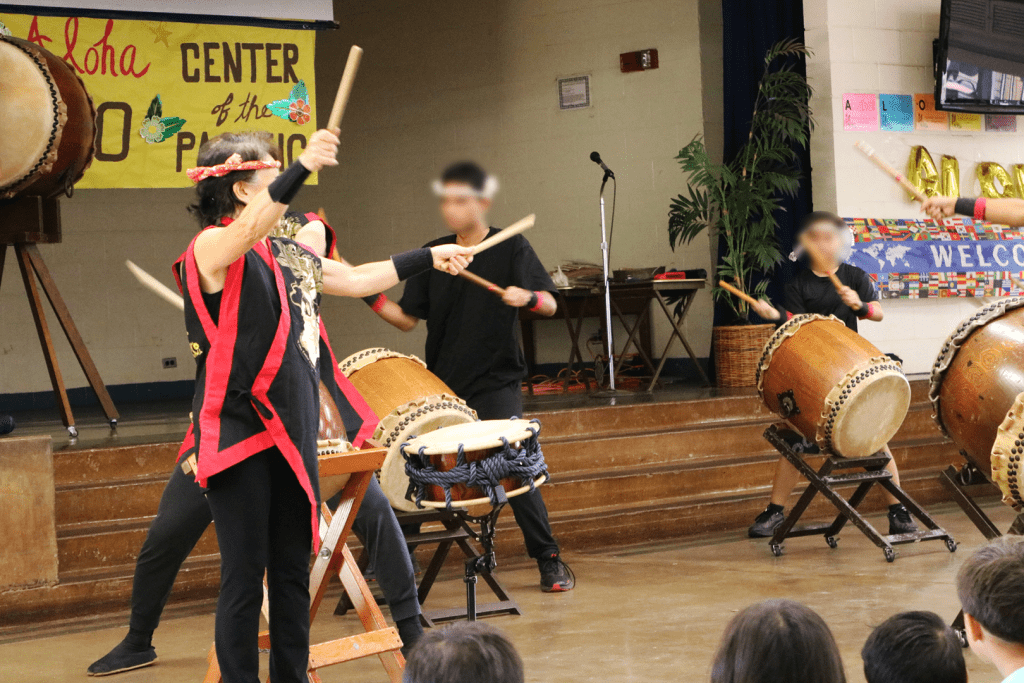
Image description: Taiko Center of the Pacific leading HSDB students in taiko performance. Student faces have been blurred for privacy.
In a letter to state lawmakers Senator Stanley Chang and Representative Tina Grandinetti, Artistic Teaching Partner Chizuko Endo said “Through the Artists in the Schools and Art in Public Places programs, I have been able to take the art of taiko (Japanese drumming) into the Hawaii School for the Deaf and Blind (HSDB) this past school year. I utilize taiko as a vehicle to teach respect, musical concepts, dynamics, subject matter, cultural etiquette, and more. At HSDB, we created an original composition to help bring attention to the public work of art on their campus. I believe it has had a positive effect on the students which I deem from their eagerness to learn and satisfaction from the work they create. […] I hope you will continue to support projects like these which benefit not only the students, but the artists, and the community as it helps to create better well-rounded and respectful citizens.”
In the final report for the residency, the classroom teacher stated that some students would come early or stay late to help with setting up the equipment, feeling a sense of responsibility and a willingness to help. Students said, “Hope we can have an exchange someday with the Deaf taiko group in Japan” and “I would be so down to continue taiko!”
A maintenance worker at the school is a former HSDB student who took part in creating the ceramic mural “Hawaiian Images” created by students with artist Sayoko Kay Mura in 1972. The worker reported feeling pride that his contribution was acknowledged and appreciated.
About Artists in the Schools
SFCA Artists in the Schools (AITS) arts residency grants provide engaging, creative, and fun learning experiences based on the Fine Arts standards for all grade levels, through residencies with qualified, trained teaching artists from the Artistic Teaching Partners (ATP) Roster. Many of these teaching artists integrate their art form with other core curriculum areas, such as language arts, math, social studies, and science, meeting both Fine Arts and other core standards.
Connecting to core curriculum through the arts can significantly increase student engagement, comprehension, and retention of information. Teaching Artists and classroom educators frequently report that students look forward to the sessions, increasing class attendance and decreasing disruptive behavior.